Greater Ancestors

World Museum

Greater Animals

Rabbits greater ancestor! Devolutionary link found.
The 18 inch cockroach

Ancient trees more than twice the height of the tallest giant redwoods?
Tree Trunk 40 Feet Thick is Only One of the Big Bend Wonders:

Giant Horsetail fossils – Devolution in Effect
Four foot TALL giant fossil Albatross
90 foot Plum Trees:
History’s biggest lungfish pops up in Nebraska
45 centimeter Mayflies in the fossil record

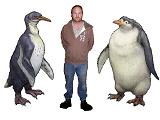
‘Giant penguins’ The Largest Penguin Ever?
One of 3 Giant Ant Species
The largest snake is not today’s Anaconda.
The fossa declares devolution not evolution!
OH NO ITS FUNGZILLLLLLA!

One of 3 Giant Ant Species
Hey Rocky watch me pull a greater rabbit out of this hat.
Fiction? Hardly. Ancient history? Absolutely.
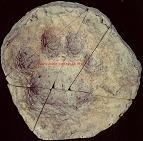
Giant cat track
Wombat The Size Of A Rhinoceros, Diprotodon, Found In Australia
Horse BlindersPenguins have been used in the military, but not these.
Largest Bear Fossil found yet!!!!
The Rare & Giant Trinil Tiger
The Giant Cheetah, a faster Cheetah.

Giant Jaquars . . . .Gooooo Jags!
Giant Zebra defies horse evolution chart! Equus Capensis
a 3-foot-long ancestor of the modern piranha.
“GIANT BIRDS” roamed – or flew above – the Earth at the same time as the dinosaurs.
The Greater Ancestor to ferns
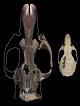
Rats!
Fossil Caviar or Giant Bacteria?
Giant Amoeba Tracks
The original Blob
The Greater “living fossil”
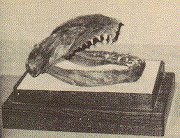
The giant snake of Mt Tsurugi
Austrailian Megafauna (partial list)
This should get your goose
“One of the Largest bats ever discovered!”
Greater Ancestor to Scarab Beetles
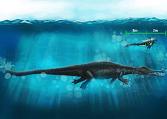

Giant Gavial the largest yet!

Giant Fossil Algae 140x larger

Amazing Giant Cone Shell Fossil

A Mighty Spider Mite

Modern Coyotes much smaller than their Ice Age Ancestors
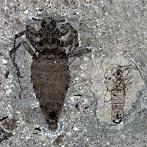
Giant Honey Bees

150 feet Sharks

Giant Fleas from the Mesozoic layer

Giant Panda, Change your name

The Giant Octopus: aka Kraken

Fossils of Giant Koalas

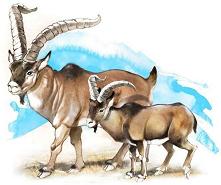
The Greater Ibex, Superior organism proves the term “modern” to be more primitive.

Giant Cranes: (Archaeology verifyng Paleontology)
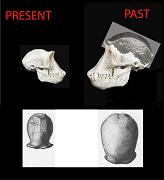
The GREATEST DEVOLUTION EVIDENCE! . . . . . . Java Man

A giant Oyster Today???

Scientists have found evidence of a giant sand worm

The Incredible Shrinking Grouper!!!
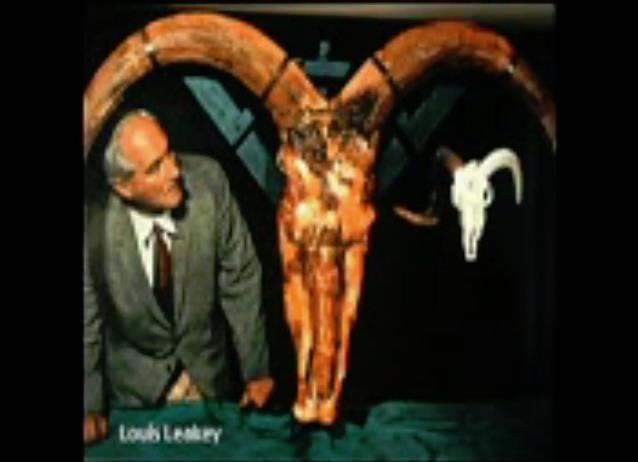
Leakey’s Giant Ram!

The fossil “Godzillus” has government academia stumped!

Great Grandpa Moonrat

The world’s biggest ever tapir!

The Greater Ibex, proves the term “modern” to be more primitive.

Shrinking frogs, indicate evolutionists becoming enlightened by devolution.

Elephants are devolving to lose their tusks

Proof of shrinkage 1/6th Red Deer

Songbirds- Singing a shorter tune

The greater Killer Whale, Livyaton

Giant Crab Claw
The Scorpion’s Claw

Giant Scorpions Tracks Scotand

Endoceros shell 13 1/2 feet

Fossil remains of a Giant Iguana

Giant Coral boulders of Tonga

The killing of 90 Giant Baboons

A Giant Horse from El Salvador

The legendary Giant Hoof Print

A Hungry Hungry Hippo

How big was the Giant Sloth?

Giant Armadillo from Brazil

King Snakehead

Giant Worm, Big fish needs Big bait

Blue Whale NOT the exception!

—————————————————————————————————————————————————————–

6 comments on “Greater Animals

  1. randy rhodes on said:

    many giant sea creatures have been discovered during recent exploratory trips to Antarctica. Amazing sea life including 12′ jellyfish, as well as snails and starfish the size of cake platters! It’s my belief that the untouched and remote regions of the world where men have not hunted the remnants of greater ancestors still struggling to exist in a decaying world, will continue to reveal and support the validity of the Devolution as a replacement for the arrogantly flawed, corrupt science of evolution.

  2. randy rhodes on said:

    There is no place in the world more remote, yet again we find greater ancestors! The following links on the above page lend more solid information on the greater ancestors of Antarctica and deep southern South America!

  3. randy rhodes on said:

    Older than Methuselah
    Life at the Bottom of the Antarctic Ocean
    The Antarctic marine system is characterized by low temperatures and low levels of food availability.
    Intuitively one would assume that metabolism and growth of invertebrates living under such conditions must be slower than
    that of species inhabiting temperate or tropical waters. And indeed, a lot of data support this assumption. Intriguingly, very
    often polar invertebrates are giants when compared to closely related species living in warmer areas.
    Giant Sponges
    Sponges (i. e. Rossellidae spp.) are a good example for this gigantism: In Antarctica they are up to two metres high (with a
    body wet mass of up to 500 kilogramme), while close relatives growing in the temperate climate of the coast of Vancouver
    Island (Canada) are no more than a couple of decimetres high. Following intuition yet again one would conclude, that such
    giants, growing at slow growth rates, must be centuries old. Three questions arise from these considerations: (i) Are those
    animals really as old as we think, and if so, (ii) what are the underlying physiological and cellular mechanisms that enable an
    animal to live for such a long time? (iii) What are the environmental parameters setting the limits to maximum body size and
    age?
    Slow Groth
    Unfortunately, in Antarctic sponges neither age (as e. g. in molluscs or fish) nor the extremely slow growth rates can be
    determined directly. We know, however, that within a group, growth rate is proportional to metabolic rate, and metabolic rate of
    an organism can be approximated by oxygen consumption. Therefore a lifetime growth model can be derived from oxygen
    consumption rates of differently sized sponges.
    Tenthousand years old
    For Stylocordyla borealis – the Antarctic lollypop sponge – we calculated a maximum age of 150 years. The slower growing
    Cinachyra antarctica may reach 1550 years of age. Average sized rossellid sponges which are 30 – 40 centimetres high are at
    least 300 years old. And the gigantic 2 metres high specimen documented for the Ross Sea is more than ten-thousand years
    old and hence the oldest creature known on this planet – a couple of times the age of Methuselah, the biblical patriarch who is
    said to have lived 969 years. It seems, that within an animal group preconditions for maximized body size are low and stable
    temperatures together with maximized oxygen availability and minimized metabolic rates.
    Aging Slowly
    The lifespan of the whole organism is related to the lifespan of its cells. Somatic cells persist until they enter mitosis and then
    divide into two daughter cells. Theoretically, this could go on infinitely. Cells age, however, and at some point (after about 50
    cell divisions in human somatic cells strains) their power of life is exhausted and proliferation seizes. The comparatively long
    life of many Antarctic organisms may be achieved either by a higher number of cell divisions per cell strain and/or by an
    increased persistence of each cell.
    Oxygen
    Cellular aging is closely related to the level of cellular oxygen turnover. Mitochondrial respiration produces highly reactive
    oxygen species (ROS, e.g. oxygen radicals and H2O2) as hazardous by-products, which are continuously released into the
    cell. These ROS exert mutagenic effects, lead to membrane damage, and hamper many life supporting physiological
    functions.
    Toxic Radicals
    The rate of ROS production depends on the rate of metabolic oxygen reduction but also on cell line age. While a cell line ages,
    a ”vicious cycle” takes place: elevated ROS production in aging cell lines causes more cellular damage, leading to further
    decrease of cellular fitness which, in turn, exacerbates ROS release until the cell is unfit for survival. As ROS production
    increases with respiration and respira- Breiten. tion decreases with temperature and food supply in cold blooded animals, ROS
    release may be distinctly lower under polar conditions. This may slow down the cellular aging process, thereby explaining the
    incredible longevity of some cold blooded polar animals. This hypothesis is currently tested in comparative investigations of
    temperate and polar bivalves.

  4. indian email database on said:

    Would you be desirous about exchanging hyperlinks?

  5. Duncan Owensby on said:

    I just want to say I’m newbie to weblog and absolutely loved you’re web blog. More than likely I’m going to bookmark your blog . You surely have amazing posts. Many thanks for revealing your webpage.

  6. clesley on said:

    sure, that is what it is there for.
    Thanks for coming to the website, and getting Greater Ancestors out there.

Leave a Reply

Your email address will not be published. Required fields are marked *

*

HTML tags are not allowed.